Time Is Money and Subscription Cancellations: A Practical Update
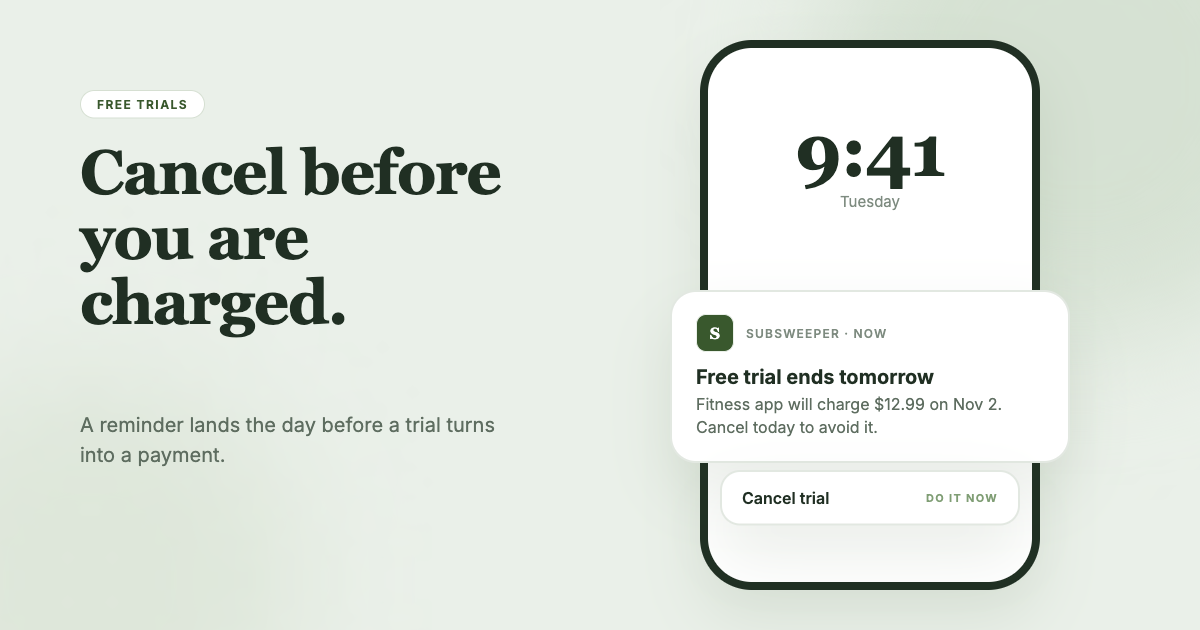
The Time Is Money initiative put a name on something subscription users already knew: some companies make cancellation take more time than signup. The policy landscape has changed since the original announcements, but the advice is the same. Make cancellation traceable.
What the initiative was trying to solve
The White House described Time Is Money as a governmentwide effort against unnecessary paperwork, hold times, customer-service loops, and subscription cancellation hurdles. The FTC click-to-cancel rule was part of that effort, although a federal appeals court later vacated it.
Where the rules stand now
The FTC amended its Negative Option Rule in October 2024 to address complaints about recurring charges. On July 8, 2025, the Eighth Circuit vacated the amended rule, holding that the FTC had skipped a preliminary regulatory analysis that the FTC Act requires. In March 2026 the FTC published an advance notice asking for public comment on whether to amend the Negative Option Rule again so that consumers can avoid recurring payments they did not intend and cancel without unwarranted obstacles. That notice is a request for comment, not a new rule.
One federal law still applies to online sales. The Restore Online Shoppers’ Confidence Act (ROSCA) bars charging for online goods or services through a negative option feature unless the seller discloses the material terms clearly before taking billing information, gets the consumer’s express informed consent, and provides simple mechanisms to stop recurring charges. The FTC’s own notice calls ROSCA the only federal law primarily designed for negative option marketing, and notes that it covers internet sales only.
What to do as a consumer
Find the billing source before you cancel: merchant, Apple, Google, Roku, Amazon, PayPal, card, or bank.
Cancel through the same source that bills you.
Save proof with a date and account email.
Check the next statement after the renewal date.
If needed, contact your bank with both the charge and the cancellation proof.
Cancel through Apple or Google
On iPhone or iPad, open Settings, tap your name, tap Subscriptions, select the subscription, and tap Cancel Subscription. Apple says to cancel at least 24 hours before a free trial ends if you do not want it to renew. On Android, open subscriptions in Google Play, select the subscription, tap Cancel subscription, and follow the instructions. Google says you keep access for the period you already paid for, and that uninstalling an app does not cancel the subscription.
Stop automatic bank payments
The Consumer Financial Protection Bureau lists four moves for payments pulled straight from a bank account:
Contact the company and say you are withdrawing permission for automatic payments. State whether you are canceling the contract or only changing how you pay.
Follow up in writing by letter or email.
Tell your bank or credit union that you revoked the company’s authorization, and follow up in writing.
Ask your bank about a stop payment order. Banks generally charge fees for these.
The CFPB adds that stopping automatic payments does not cancel what you owe. Keep a log of each request and its date. If a payment goes through after you revoked permission, those records support a refund request, and the CFPB says to report unauthorized payments to your bank right away.
Why this still matters
The law may change, but billing systems are still messy. If a subscription is tied to an old email, bundled through a partner, or billed by an app store, the company name on the receipt may be the fastest path to stopping it.
Frequently asked questions
Is the FTC click-to-cancel rule in effect?
No. The Eighth Circuit vacated the amended rule on July 8, 2025. The FTC has since asked the public for comment on possible new amendments.
Does a company still have to let me cancel?
For online sales, ROSCA requires simple mechanisms to stop recurring charges. Section 5 of the FTC Act, which prohibits unfair or deceptive practices, also applies to negative option marketing.
What proof should I keep?
Keep the confirmation email or screenshot, the date, the account email, and the amount of each charge you dispute.
What if I was charged after canceling?
Contact the company with your proof first. If that fails, contact your bank or card issuer with the charge and the cancellation record.
Sources
SubSweeper can track and cancel your subscriptions in one place at subsweeper.com.