What Is the Hardest Subscription to Cancel? (2025)
Quick answer
No official source ranks subscriptions by how hard they are to cancel. The best-documented hard case is Amazon Prime, where the FTC alleged a deliberately complex cancellation process and secured a $2.5 billion settlement in September 2025. In daily life the hardest subscription is usually the one billed somewhere you forgot, such as an app store or a bundle.
Why this question matters
You would think canceling a subscription would take two clicks: open the app, hit cancel, done. Some companies make it harder. Between hidden menus, guilt screens and free trials that turn into paid plans, getting rid of a subscription can feel like escaping an escape room. This guide covers what regulators have documented, why companies add friction, and the routes that work when a cancel button hides.
What the FTC said about Amazon Prime
The clearest public record of a hard cancellation comes from the FTC's announcement of its Amazon settlement. The FTC alleged that Amazon used confusing interfaces to enroll people in Prime without their knowledge, and built a complex cancellation process to keep them from leaving. The agency's chairman said Amazon "made it exceedingly hard for consumers to end their subscription."
The settlement included a $1 billion civil penalty and $1.5 billion in consumer redress, covering an estimated 35 million consumers. Under the order, Amazon must:
Show a clear, conspicuous button to decline Prime during checkout.
Disclose material terms at enrollment, including cost, charge dates and frequency, auto-renewal and how to cancel.
Offer a cancellation method that matches how the customer signed up, and not one that is difficult, costly or time-consuming.
Those requirements double as a checklist for any subscription you sign up for. If a company hides cost, renewal dates or the exit, you have learned something before you pay.
Where the rules stand
The FTC's Negative Option Rule page lists a long timeline. The agency proposed a click-to-cancel provision in March 2023 and announced a final rule in October 2024. In February 2026 it published a notice proposing a revision of the rule to conform to federal court decisions, and in March 2026 it asked for public comment on amendments to help consumers avoid unwanted recurring charges and cancel without unwarranted obstacles. The page does not explain the court decisions, so check the FTC site for the current status before relying on any specific cancellation right.
The subscriptions that trip people up
Instead of a ranking, here are the patterns that make cancellation hard in practice.
Subscriptions billed by an app store
On iPhone, Apple's steps are Settings, your name, Subscriptions, pick the subscription, then Cancel Subscription. On Android, Google says to open the subscriptions page in Google Play, select the subscription and tap Cancel subscription. Both companies say that uninstalling the app does not cancel anything (Google states this directly; Apple's page describes the Settings route only). Many people delete the app and keep paying. See Apple and Google for the full pages.
Free trials
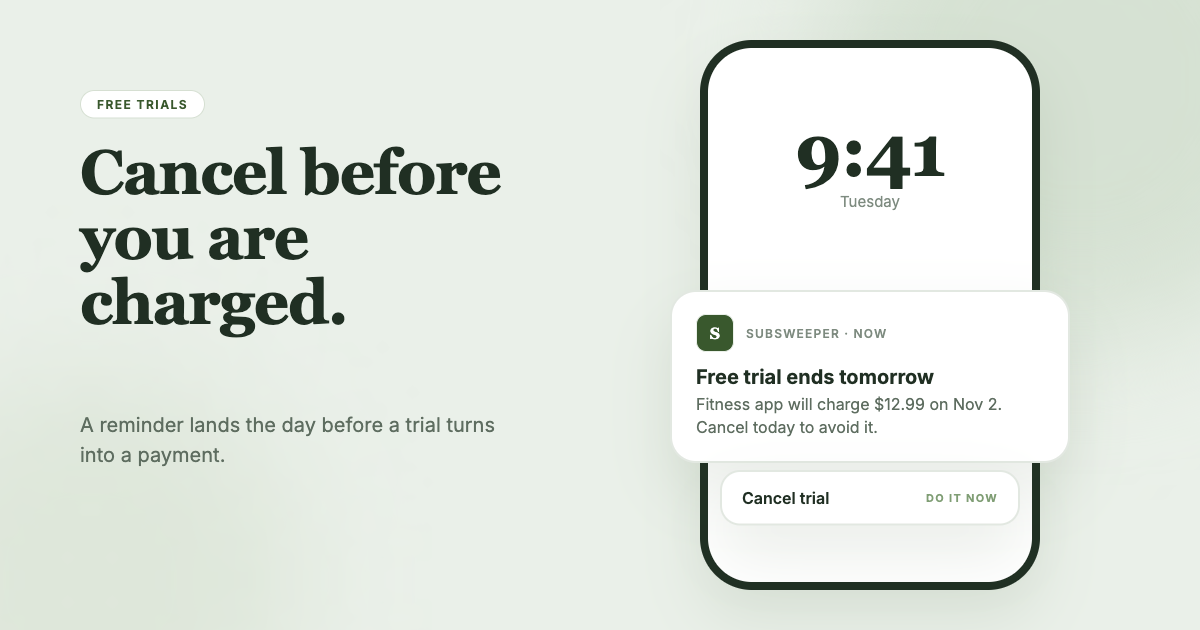
A trial is a paid plan with a delayed first charge. Apple advises canceling at least 24 hours before a trial ends if you do not want it to renew. Treat the end date as a deadline from day one.
Subscriptions bought through someone else
If you added a service through a TV provider, a bundle or another company's checkout, the cancel button lives in that account and not in the service's own settings. The receipt tells you who bills you. Check it before searching the service's help pages.
Why companies add friction
Easy cancellation means more people cancel. Friction wears people down: some give up halfway, some accept a discount or a pause offer, and many forget until the next charge. Some people call this model a roach motel, easy to get into and hard to leave. The Amazon case shows regulators treating it as a legal issue.
Tips to get out of a hard-to-cancel subscription
Go to the payment source. If Apple or Google bills you, cancel there.
Keep proof. Save confirmation emails and screenshots, and note dates of chats and calls.
Ask in writing. A short email stating you are canceling creates a record.
If charges continue after you cancel, contact your card company. The CFPB says to send a written billing error notice within 60 calendar days after the charge appeared on your statement (CFPB guide).
For bank account payments, tell the company you are withdrawing permission, tell your bank, and follow up in writing. The CFPB notes that banks generally charge fees for stop payment orders (CFPB guide).
Make the next cancellation easier
The best defense against a hard cancellation is knowing about the subscription before it renews. SubSweeper scans your email receipts (read-only) and shows your active subscriptions, free trials and upcoming renewals in one dashboard. It sends reminders before charges, which gives you time to cancel before a stubborn plan renews again.