Subscription Traps and Dark Patterns: How to Spot Them
Quick answer
A subscription trap is a sign-up or cancellation flow built to enroll you in charges you did not mean to accept or to make leaving hard. The FTC's term is dark patterns. Warning signs include pre-checked boxes, a free offer with a shipping fee, terms buried in dense text, a renewal price you cannot find, and a cancel path that runs through promotions and extra screens.
This is general information, not legal advice. Whether a given practice is lawful is for a court or a lawyer to decide.
What the FTC means by dark patterns
In September 2022 the FTC published a staff report called Bringing Dark Patterns to Light. Its press release sorts the tactics into four groups:
- Misleading consumers and disguising ads, such as ads dressed up as editorial content and false countdown timers.
- Making it hard to cancel subscriptions or charges.
- Burying key terms and junk fees, such as limitations hidden in dense terms of service and mandatory fees revealed late in checkout.
- Tricking consumers into sharing data.
The second and third groups are the ones that cost subscribers money.
The report describes deceptive subscription sellers that charge consumers for products they did not intend to buy or no longer want. Its example is an FTC case against ABCmouse, in which the FTC alleged the company made cancelling free trials and subscriptions very difficult despite promising easy cancellation. The FTC described a difficult-to-find, lengthy, and confusing cancellation path that led people through promotions and links that pulled them away from cancelling. It also said it has sued companies that required users to go through a maze of screens to cancel recurring subscriptions. These are the FTC's allegations in its report.
In a March 2026 Federal Register notice, the FTC says the practices behind its complaints include inadequate disclosures, billing without consent, and making cancellation difficult or impossible. It reports more than 90 complaints a day in 2025.
Signs at sign-up
A pre-checked box. The FTC's consumer advice says a checked box can authorize ongoing charges, extra products, or sharing of your information. Uncheck anything you did not choose.
A free offer that costs something. The FTC says that if you must pay shipping or a fee, the offer is not fully free: free means free.
Terms you cannot find. The FTC's advice is blunt. If you cannot find or understand the terms, don't sign up. The terms should say what you are agreeing to, how long the trial lasts, and how to cancel before you are charged.
An ad from an affiliate. The FTC notes that many free-trial ads come from affiliate marketers who are paid per click and may exaggerate.
A small up-front price and a larger renewal price. The FTC says promotional rates can expire and tells people to confirm the renewal amount. California's automatic renewal statute requires, for offers with a trial, a clear explanation of the price that will be charged after the trial ends, so a missing price after the trial is a gap worth noticing.
A cancellation clock that starts before you have the product. California's Attorney General describes a trial with a 15-day cancellation window counted from the initial ship date, even though the product arrives after the window closes.
Extra enrollments. The same page says some companies also enroll customers in additional offers carrying monthly fees they did not agree to. Read each screen of checkout, not only the first.
Signs at cancellation
- You can sign up online but the cancel option is only by phone or mail.
- The cancel button is several menus deep, or hidden behind a support chat.
- A page of discounts, pauses, or warnings appears and the cancel link gets smaller, greyed out, or removed.
- You cancel and get no confirmation email or number.
California's law has a specific answer for the online versions. Its text says a business that lets you sign up online must let you terminate online, with a direct link or button in your account or settings, or an immediately accessible termination email. It lets a business show a retention offer online only if a prominent direct link or button titled click to cancel, or words to that effect, is displayed continuously alongside the offer. Rules in other states differ, and the federal click-to-cancel rule was vacated in 2025.
A checklist before you enter a card number
- Find the price after the trial, the billing period, and the renewal date on the page before the button.
- Find how to cancel and where. If the answer is call or mail, decide whether you will do that.
- Look for pre-checked boxes and uncheck them.
- Take a screenshot of the offer page. It shows what was promised.
- Put the trial end date in your calendar, two days early.
- Use the FTC's advice to research the company: search its name with scam or complaint, and compare reviews from several sources.
If you already fell for one
The FTC's steps for stopping a subscription you do not want are to contact the company and follow its cancel instructions, keep a copy of your request, note every conversation with date and time, and watch statements. If charges continue, file a dispute (also called a chargeback) with your card issuer online or at the number on the back of the card, follow up in writing, and report the company at ReportFraud.ftc.gov or to your state attorney general. California's Attorney General lists the same card-dispute step and also takes reports through its Public Inquiry Unit.
Our articles on disputing a subscription charge, chargebacks, and charges after cancelling cover each step in more detail.
Where SubSweeper fits
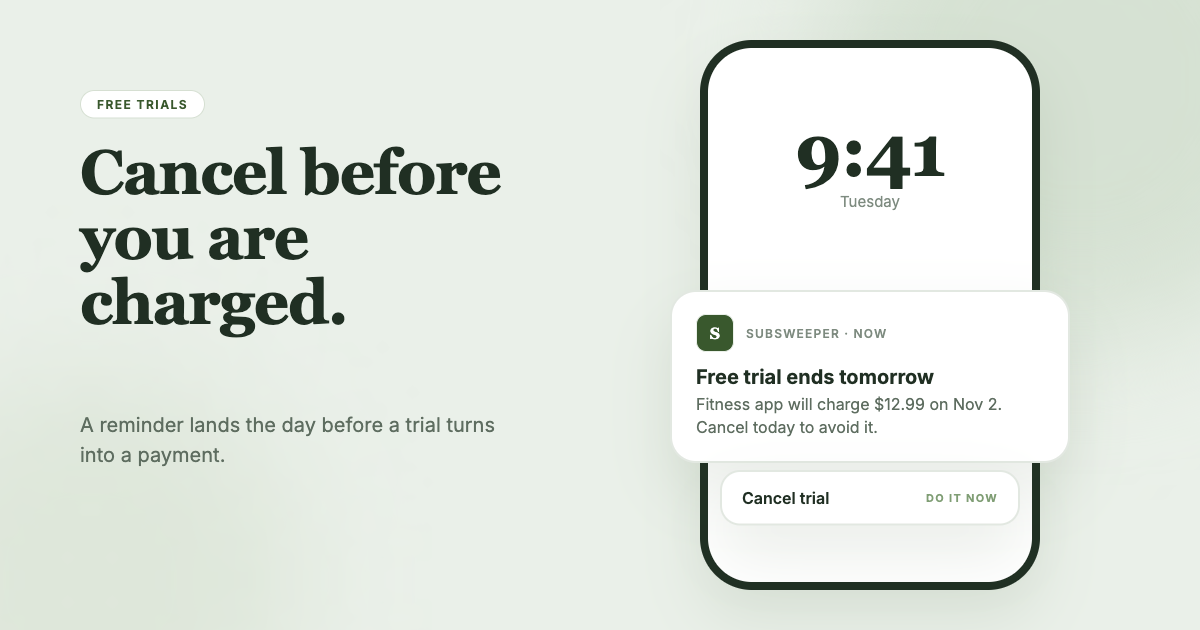
Many traps work because the charge arrives long after the sign-up screen is forgotten. SubSweeper scans your email receipts (read-only) and puts active subscriptions, free trials, and upcoming renewals in one dashboard, with the monthly total, so a plan you forgot is visible. It sends reminders before charges and helps you cancel.
Official sources
- ftc.gov/reports/bringing-dark-patterns-light
- ftc.gov/news-events/news/press-releases/2022/09/ftc-report-shows-ri
- consumer.ftc.gov/articles/getting-and-out-free-trials-auto-renewals-and-nega
- oag.ca.gov/consumers/general/free-trial-offers
- federalregister.gov/documents/2026/03/13/2026-04952/rule-concerning-the-use-of-